Healthy Eating Explained in Seven Words
I am highly interested in living a healthy lifestyle and always take every opportunity to learn about nutritious eating, food, and diet. Over the past five years, I have watched numerous documentaries and TED talks and read extensively about healthy food, diet, and lifestyle. However, one talk has remained permanently engraved in my mind. Author Michael Pollan summarized healthy eating in just seven words:
Eat Food, Not Too Much, Mostly Plants
At first glance, this advice seems ordinary — perhaps even obvious. But its power lies in its simplicity. Let’s examine these principles in reverse order.
Mostly Plants
Most scientists and the general public agree that excessive meat consumption, especially red meat, is not beneficial for human health. Many meats are processed and high in salt, and they may also contain significant amounts of saturated fat, which can increase the risk of high blood pressure, high cholesterol, and colorectal cancer. Therefore, it is advisable to reduce meat intake and incorporate more plant-based foods into a healthy diet.
Not Too Much
Don’t eat too much. Sounds simple, right?
Regardless of whether you’re consuming healthy food or junk, moderation is key. Your daily food intake should be just enough to meet your body’s caloric and nutrient requirements. Eating more than necessary leads to weight gain, which can, in turn, contribute to various health issues. Maintaining a stable weight over time is a strong indicator that you are balancing your intake with your body’s needs. For those looking for practical ways to achieve this, my previous article, ‘How I Maintained My Weight for Over 40 Years Using a Simple Trick,’ offers deeper insights into sustainable weight management.
Eat Food
At first glance, “Eat Food” may seem self-explanatory, but it is actually the most crucial principle to understand and follow. So, what exactly is food in ‘Eat Food’?
If you look in the dictionary, you will find definitions of food like:
— Something that people and animals eat, or plants absorb, to keep them alive.
— that provide energy, nutrients, and sustenance for growth, repair, and overall bodily functions.
According to the above definitions, anything that we eat or can consume qualifies as food, such as fruits, vegetables, ice cream, bread, breakfast cereals, sugary drinks, alcohol, potato chips, gravies, and ready-to-eat meals. However, in the context of “Eat Food,” the term refers to food provided by nature, typically eaten either raw or cooked, and not processed in factories. Naturally, fruits, vegetables, grains, lentils, milk, and fish fit this definition of food. On the other hand, many items that people commonly consider food — such as bread, ice cream, chips, jams, chocolate pudding, sugary drinks, and breakfast cereals — are not truly considered food in this sense. Except for cakes and biscuits baked at home or local bakeries, commercially manufactured cakes and biscuits are considered highly or ultra-processed foods.
A simple rule of thumb: If an item has no nutrition label, it is almost certainly 100% food. You won’t find a label on an apple or a bunch of kale. Conversely, if an item has a long label filled with ingredients you don’t recognize or wouldn’t keep in your pantry, it isn’t ‘real food’ — it’s a food product.
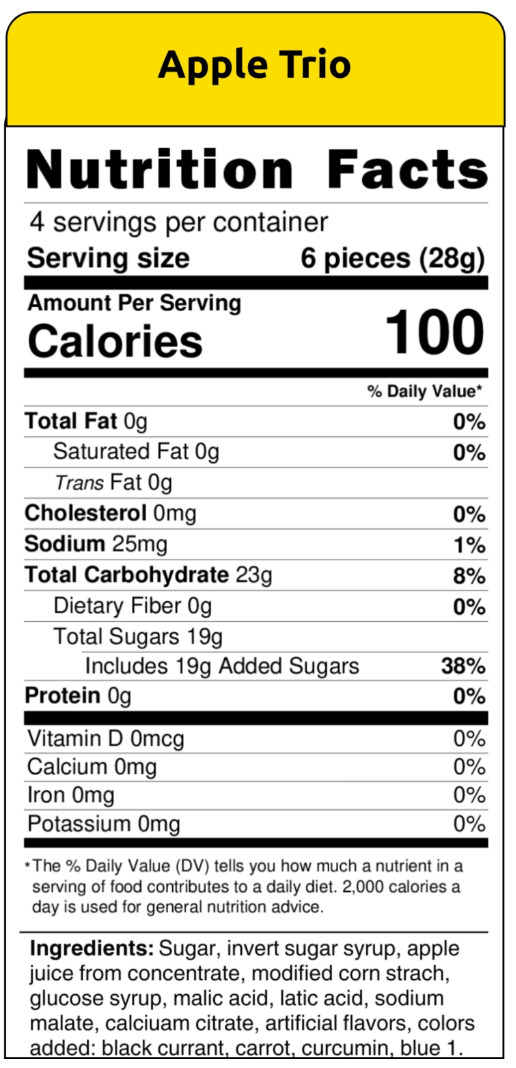
How many of the ingredients can you recognize, or you will use while you cook at home? If an item contains several ingredients, it is not food! In a 28-gram serving, there are 23 grams of carbohydrates, including 19 grams of added sugar. Would you still consider this real food?
Another way to distinguish real food from processed foods made in factories is by considering their shelf life. For example, a banana might last only two weeks, while banana chips may last up to a year. The same applies to fruits versus jams and fruit juices. When a fruit is processed to create jam or juice, it often has added sugar, colors, flavors, and preservatives. During this process, the fruit also loses some of its nutrients and fiber. Therefore, whenever possible, it’s better to choose fresh fruits over juices and jams. However, frozen vegetables and fruits typically retain nutrients similar to their fresh counterparts, therefore, it is okay to use them in cooking. Another exception to the long shelf life rule includes grains, lentils, and honey, which naturally have an extended shelf life without the need for preservatives or processing.
Let us have a look at breakfast options: oats verses breakfast cereal Fruit Loops. A typical Oats box contains only one ingredients: rolled oats. Compare this to the ingredients in a Fruit Loops cereal box:
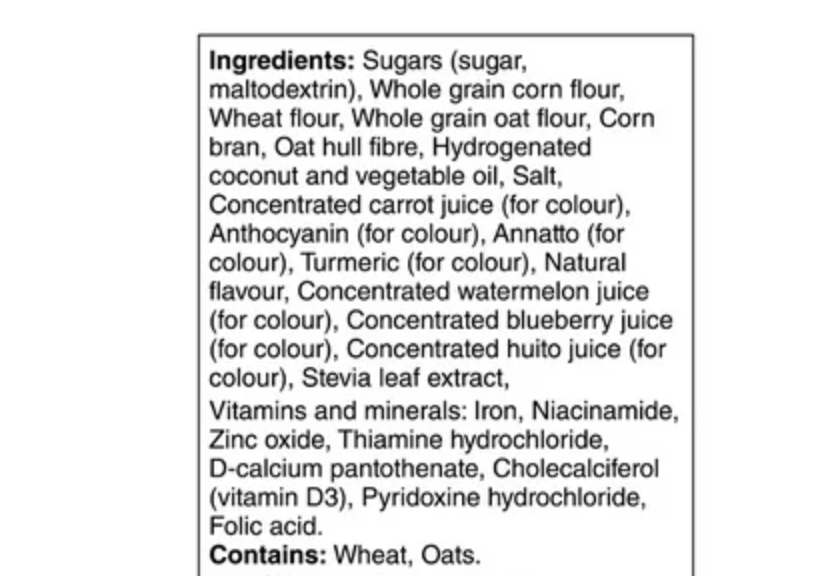
Notice that first ingredient in this cereal is sugar! Is this the ‘food’ you want to eat or give to your children every day?
A simple way to determine whether something is real food and worth eating is to ask whether it was commonly consumed 50 years ago or is still a staple for people in developing countries.
Growing up in India during the 1960s and 1970s, my mother prepared every meal from fresh ingredients — partly because processed options were scarce, and partly because they were unaffordable. We even made our own yogurt, a tradition I continue today, as it costs a fraction of the store-bought version. However, times have changed in India too. Today, ultra-processed foods have flooded global markets, often marketed as convenient or even ‘healthy’ alternatives.
I understand that in today’s fast-paced lifestyle, completely avoiding processed food may not always be practical. In such cases, opting for minimally processed foods with little to no preservatives is a reasonable choice. However, it is advisable to avoid ultra-processed foods whenever possible. Some examples of ultra-processed foods are sugary soft drinks, chips, breakfast cereals, candy, chocolates, margarine/hydrogenated oil, packaged breads, sauces, dressings & gravies, ice-cream & similar deserts, packaged puddings, packaged cold meats, ready-to-eat meals, sweet yogurts, packaged soups, packaged sweet popcorns and chicken nuggets. A research funded by the Heart and Stroke Foundation of Canada found that ultra-processed foods are responsible for one-third of heart disease and stroke-related deaths in the country.
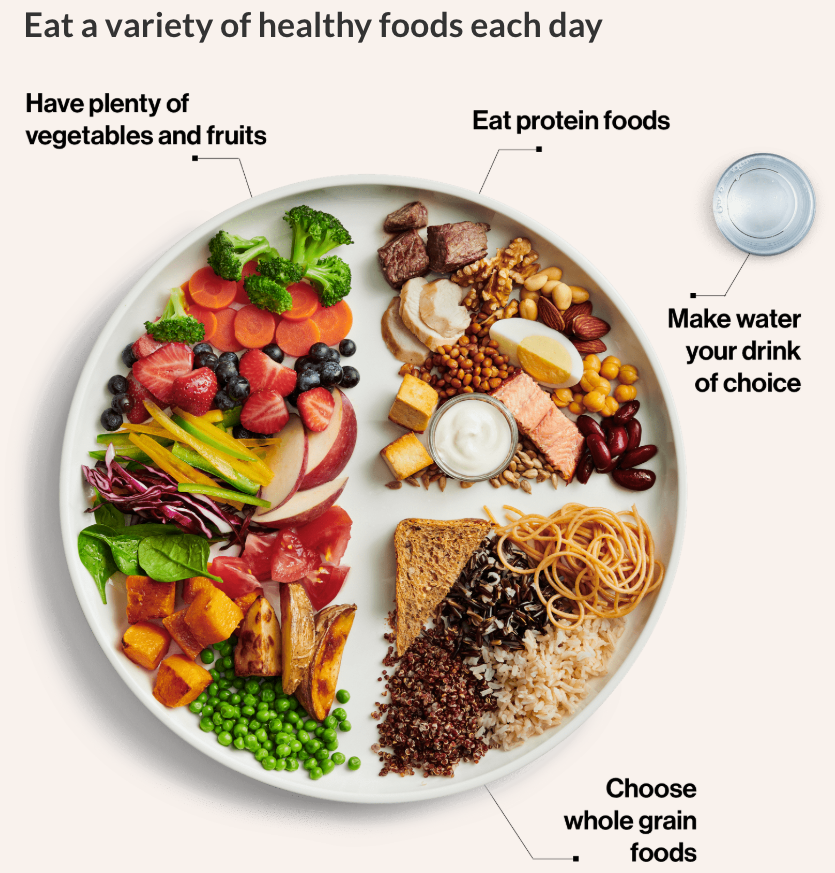
In the latter part of the 20th century, many government organizations and scientific communities advocated against fat, particularly due to concerns about cardiovascular health. In response to the push for lower-fat processed foods, the food industry reduced fat content but compensated by adding sugar and salt to maintain flavor. This increase in sugar consumption is believed to be a major factor in the global rise of diabetes rates. To promote better health, it is advisable to avoid foods high in sugar, as many ultra-processed foods contain excessive amounts. Canada food guide recommends to eat variety of healthy food each day.
Conclusion
True nutrition doesn’t require a degree in biochemistry. By returning to the basics — prioritizing plants, practicing moderation, and choosing real food over factory-made products — we can reclaim our health, one meal at a time.
You may find the following articles on health and lifestyle useful.
What are your thoughts on this post? Share your comments with us.
Stay ahead of the curve. Subscribe here to get notified whenever I publish a new guide or tool.
Share your comment or feedback. We'll get back to you as soon as we can.