It’s Not the Cake or the Coke — This Is What’s Really Bad for You
We worry about sugar, fat, and carbs — but the biggest threat to our health might just be the chair beneath us.
Have a close look at the image below.
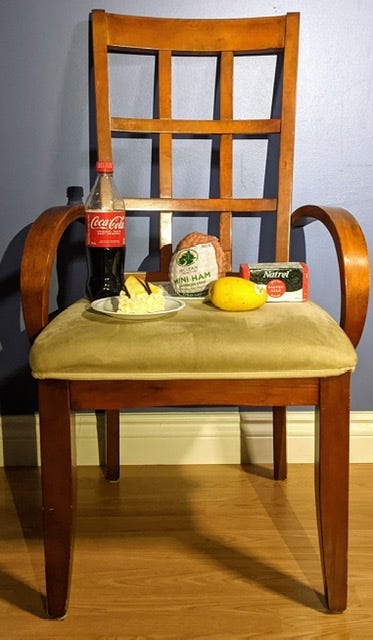
On the chair, you can see Coke, cake, butter, ham, and even a mango — a mix of guilty pleasures and healthy choices.
Now take a moment.
Which one do you think is the worst for your health?
Coke?
Butter?
Cake?
Ham?
Most of us would quickly point to the sugary drink or the rich dessert. Maybe even the processed meat. We’ve been trained to see food as the main villain in the story of health.
But here’s the twist — the real culprit isn’t on the chair.
It’s the chair itself.
Yes, what’s truly bad for your health is sitting.
We sit to work, we sit to eat, we sit to relax — and sometimes we even sit to exercise our minds while neglecting our bodies. The average adult spends more than eight hours a day seated — and another seven or eight hours sleeping. That means we spend nearly two-thirds of our lives being completely still.
Scientists now call sitting “the new smoking.” Prolonged sitting is linked to heart disease, diabetes, obesity, and even early death. When you sit for long stretches, your blood flow slows, your muscles go idle, and your metabolism drops. Over time, this leads to weight gain, poor circulation, and higher cholesterol and blood sugar levels.
Ironically, even people who hit the gym regularly aren’t fully protected if they spend most of their day sitting. A 30-minute workout doesn’t undo 10 hours of being sedentary.
Our bodies were never designed for this kind of stillness. We evolved to move — to walk, stretch, bend, reach, and explore. Movement keeps our joints supple, our hearts strong, and our minds alert.
Health authorities like the American Heart Association and the Heart and Stroke Foundation of Canada recommend at least 150 minutes of moderate-intensity physical activity per week — and more is even better. The good news? You don’t need a gym membership to hit this target. With a little creativity, everyday activities can easily add up. Here’s how it worked in my own life…
A Personal Story
When I moved to Canada about 25 years ago, my first apartment was on the 16th floor — technically the 15th, since there was no 13th. There were only two elevators in the building, and during morning and evening rush hours, the wait time was painfully long. So I started taking the stairs instead of waiting for the elevator. It saved me time — and gave me free exercise.
For two years, my office was on the 9th floor, and I don’t think I used the elevator more than a few dozen times. Across the road stood a big Bell Canada building with a massive surface parking lot. Every day, I noticed that while most people tried to park as close to the entrance as possible, one man always parked at the farthest spot — even in bad weather. Why? I can only guess: to get a little free physical exercise.
When I changed jobs two years later, my new office was on the ground floor of a three-storey building. I missed those nine floors of daily stairs, but even here there were 40 steps between levels. Every time I left my desk for the washroom, I’d climb those 40 stairs a few times. And I made the best use of my one-hour lunch break — eating in ten minutes and spending the rest walking or jogging. Meanwhile, most of my colleagues stayed at their desks, watching videos on their phones.
In the early years, my wife and I shared one car. Her office and mine were in the same direction, but still several kilometres apart. Each morning, she’d drop me about three kilometres from my office before continuing on to hers. She’d suggest I take a bus from there, but I always choose to walk instead — saving bus fare and getting exercise in nature. Even in harsh Canadian winters, I never stopped walking. That routine lasted nearly a year.
Then there’s my mother. About six years ago, when she was 80, she was diagnosed with type 2 diabetes. Her doctor prescribed a small dose of Metformin and encouraged her to walk daily. She began walking for about an hour each day. Within a year, her blood glucose levels dropped so much that the doctor discontinued her medication. She remained off diabetes medicine for almost three years. Though she’s back on a very small dose now, her diabetes remains under control — largely thanks to her commitment to daily movement.
Final Thoughts / Take Action
From observing friends and family, I’ve noticed a clear pattern: people who move more tend to enjoy better health.
You don’t need a gym membership to be physically active. Small, creative efforts add up:
- Take the stairs instead of the elevator.
- Walk your child to school or get off a stop early on the bus/subway.
- Walk while talking on the phone.
- Garden, jog, or go for a brisk walk.
Even 60 minutes of activity spread through the day can make a big difference — and it often costs nothing.
You might live the first two-thirds of your life without major health problems, even if you’re sedentary. But if you want to enjoy the last third, start moving now. Small daily habits can prevent regrets later.
For evidence-based guidance, consider reading Physical Activity Guidelines for Americans, 2nd Edition — it’s full of practical tips and motivation.
The good news is that staying active doesn’t require fancy equipment or complicated routines. Stand up every hour. Move whenever you can. Every little bit counts.
So next time you see a chair, take a moment to think.
The Coke, the cake, the butter — they’re innocent compared to the seat that’s quietly stealing your health one hour at a time.
Maybe it’s time to stand up for yourself..
What are your thoughts on this post? Share your comments with us.
Stay ahead of the curve. Subscribe here to get notified whenever I publish a new guide or tool.
Share your comment or feedback. We'll get back to you as soon as we can.