How Financially Literate Are Canadians?
What three simple questions reveal about financial understanding in Canada
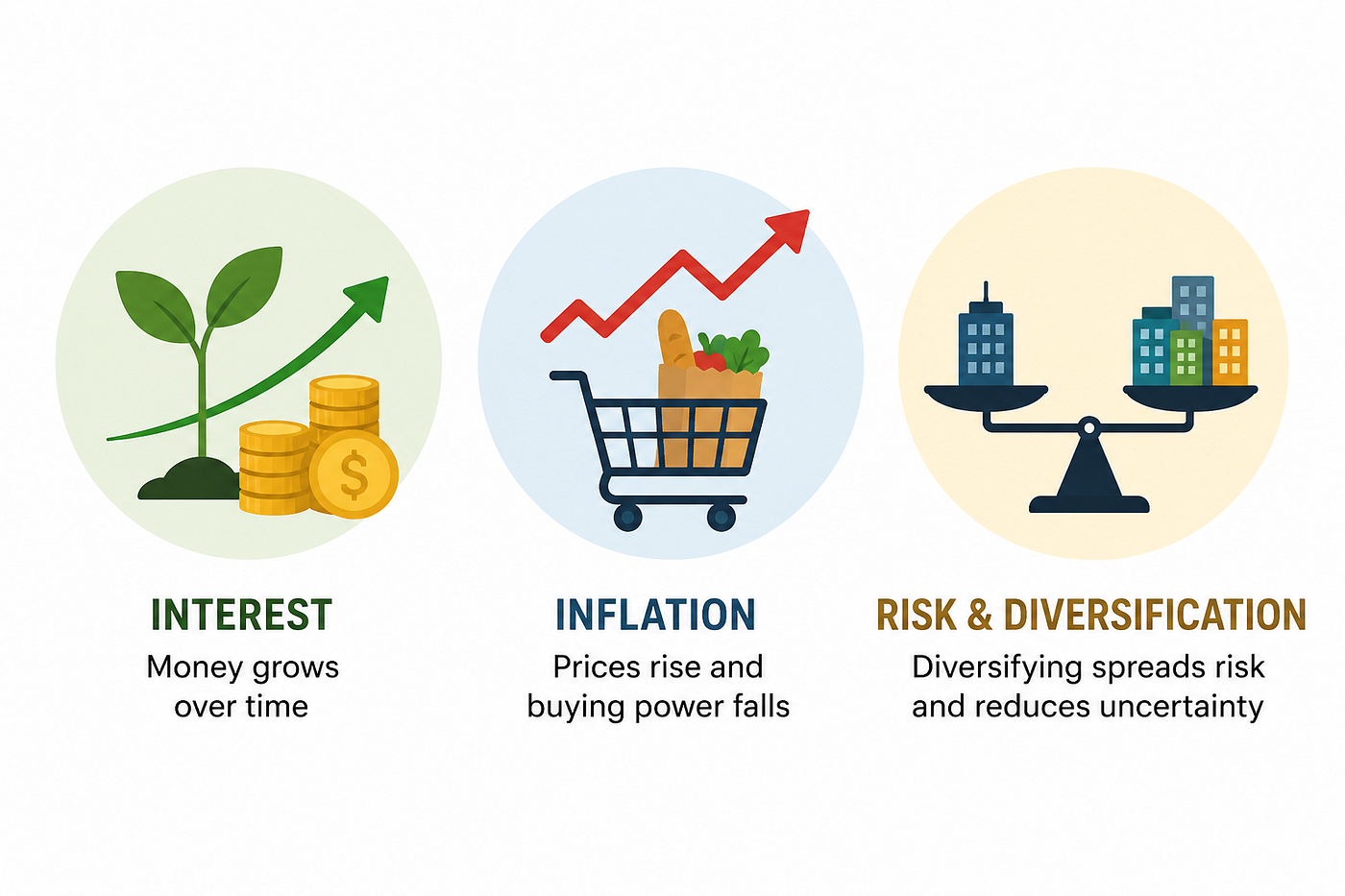
Financial literacy means different things to different people. Some define it as having a deep understanding of investing, taxation, retirement planning, and registered accounts such as RRSP, TFSA, FHSA, and RESP, while others call themselves financially literate if they have basic knowledge about interest, inflation and risk management.
To measure this basic level of financial knowledge, the OECD uses three standard questions that are widely adopted in international surveys, including the Canadian Financial Capability Survey (CFCS).
1. Understanding of Interest Rates:
Suppose you had $100 in a savings account and the interest rate was 2% per year. After 5 years, how much do you think you would have in the account if you left the money to grow?
Answers: More than today; Exactly the same; Less than today; Don’t know.
2. Understanding of Inflation:
Imagine that the interest rate on your savings account was 1% per year and inflation was 2% per year. After 1 year, how much would you be able to buy with the money in this account?
Answers: More than today; Exactly the same; Less than today; Don’t know.
3. Understanding of Risk and Diversification:
Is the following statement true or false?
Buying a single company’s stock usually provides a safer return than a stock mutual fund.
Answers: True; False; Don’t know.
According to the Bank of Canada staff working paper, which is based on microdata from the 2020 COVID-19 Consumer Awareness Survey (CAS), conducted by the Bank of Canada in November 2020:
- About 90% of respondents answered the interest question correctly.
- About 70% of respondents answered the inflation and risk questions correctly.
Knowledge of inflation and investment risk is important for long-term purchasing power, investment decision-making and retirement planning, and roughly 1 in 3 respondents misunderstand inflation, risk management or both.
As the survey does not publish the exact share of respondents who answered all three correctly, we cannot state an exact overall “financial literacy rate.” However, given that performance is lower on inflation and risk questions, it is clear that:
A significant number of Canadians do not fully understand all three basic financial concepts.
Note: As per a CBC News post, Ontario high school students will soon need to pass a financial literacy test to graduate. Ontario high school students will need to achieve at least 70% to pass
Conclusion
Financial literacy isn’t about being an expert in everything — it’s about understanding the basics well enough to make better decisions with money. Even small improvements in understanding interest, inflation, and risk can meaningfully improve long-term financial outcomes.
If this article helped clarify anything, feel free to share it or leave your thoughts below.
Also, if there’s a financial concept or lesson you’ve learned from someone that helped you improve your investment planning, please share it.
Disclaimer: This article is for educational purposes only and is not financial advice.
What are your thoughts on this post? Share your comments with us.
Stay ahead of the curve. Subscribe here to get notified whenever I publish a new guide or tool.
Share your comment or feedback. We'll get back to you as soon as we can.