Life without a Credit Card
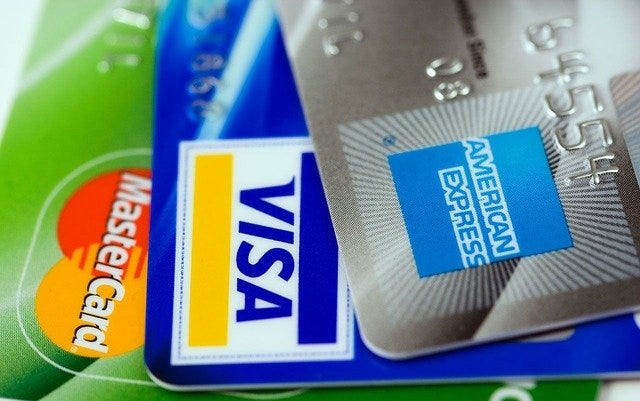
I was born in New Delhi, India. During the 1980s, while I was still in India, like 99.9% of Indians, I did not have a credit card. Diners Club International offered credit cards by invitation only to wealthy individuals, and they could be used only at five-star hotels and select high-end restaurants and shops. At that time, most Indian banks operated with paper ledgers, and I could only go to my home branch to deposit or withdraw money. Needless to say, there were no ATMs. Most people received their monthly salary in cash, and about 99% of the economy was cash-based.
The cash economy offered some challenges, as one had to carry sufficient money in the wallet while shopping; however, as a bonus, one could rarely indulge in impulse buying. Shopping was always pre-planned, and we rarely bought anything extra. Sometimes, when people would run out of money, the local shop owners would allow a small informal credit facility without any paperwork until the first day of the next month, as everyone used to get their salary on the last working day of the month. And on the first day of the next month, all credit had to be paid in full; otherwise, the person would not get credit anymore. This informal credit system and cash-based economy prevented people from accumulating too much consumer debt, and most people lived within their means.
Another challenge was withdrawing large amounts from the bank and safely carrying the cash to make big payments due to concerns about theft or snatching. The biggest challenge was carrying enough cash during vacations, because if you ran out of money, you could only withdraw cash from your home branch.
I remember an incident from the late eighties when I went to Shimla, the summer capital of India during the British Raj, with my wife and we almost ran out of cash. On the last day of the trip, after paying for the return bus fare, we went to a small coffee shop and ordered two cups of coffee. On checking my wallet, I discovered that I had only 5 Rupees (about 0.5 dollars in those days), barely sufficient to cover the cost of the coffee. As I was worried that I might need that money during our bus journey, we quickly disappeared from the coffee shop before the server could bring the coffee to our table. During the 10-hour bus journey back to Delhi, we did not have any money to buy snacks or food; all we could afford were two cups of tea.
Credit Cards in the 1990s
In the early 1990s, some banks started offering credit cards to the general public; however, I did not get one because very few merchants accepted credit cards, and some even charged a surcharge of 2–3% to use them.
In 1997, after I moved to Canada, I wanted to continue living without a credit card; however, my friends advised me that without a credit history, it would be very difficult to get a mortgage to buy a home. Initially, my bank refused to issue me a credit card. After six months, TD Bank agreed to issue me a credit card with a $500 monthly limit against a security deposit of $500. Often, I used to make a payment even before I received my monthly credit card statement so that I didn’t run out of the credit limit. Within a few months, the bank increased the credit limit to $2,000, and soon I had several credit cards with limits up to $14,000.
Are credit cards bad?
It depends.
If you can control impulse buying and pay off the entire balance when you receive the credit card statement, credit cards are not bad — they can actually be good. When you use credit cards, you don’t need to carry large amounts of cash, and you get a consolidated statement of all your purchases at the end of the month. In fact, you may end up getting free money (cash back) or rewards just by using your card to make regular purchases, which you need to do anyway, whether you pay using cash, a debit card, or a credit card. I get back about $500 every year by using my cash back credit card. I have never carried any balance on my credit cards. I always pay the credit card balance in full the day I receive the statement; therefore, I have never paid any interest to credit card companies. (I know they don’t like customers like me.)
If you can’t control impulse buying and carry a balance on your credit card, credit cards may not be good for you. Most credit cards charge a 19–26% annual interest rate — compare this to the 0.05% annual interest you may earn on a savings account. Credit card companies will let you get away with making only a 2–3% payment of the statement balance; however, it may take 15–20 years to pay off a $5,000 balance, and you may end up paying more than $5,000 in interest.
Over the years, I have come to realize that credit cards are not the problem; impulse buying is the problem. A credit card is just a financial tool. Used responsibly, it can be convenient and even rewarding. Used irresponsibly, it can become very expensive.
Final Thoughts
Credit cards are neither good nor bad — they are simply a financial tool. The outcome depends on how you use them.
If you can avoid impulse buying and pay off your credit card balance in full before the due date, it is fine to use credit cards. Otherwise, consider getting rid of them (after paying off the balances). You may use cash or debit cards to make purchases. Many people don’t realize that debit cards can also be used for online purchases. For emergencies, consider maintaining an emergency fund or arranging overdraft protection with your bank, and always try to live within your means.
What are your thoughts on this post? Share your comments with us.
Stay ahead of the curve. Subscribe here to get notified whenever I publish a new guide or tool.
Share your comment or feedback. We'll get back to you as soon as we can.